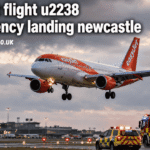

The easyjet flight u24429 emergency attracted significant attention after an Airbus A320 operating between Lyon, France, and Porto, Portugal, was forced to return shortly after takeoff. The incident raised questions about aviation security, emergency procedures, and how airlines respond when unexpected situations develop during a flight. While emergency declarations often cause concern among travelers, this event ultimately ended safely thanks to the quick actions of the flight crew, cabin staff, passengers, and emergency responders.
Reports indicate that the aircraft departed from Lyon as scheduled before an onboard disturbance prompted the crew to take immediate action. The easyjet flight u24429 emergency became a widely discussed aviation incident because it involved both security concerns and a rapid operational response. Understanding what happened provides valuable insight into the safety measures that protect airline passengers every day.
Overview of the Flight and the Incident
The flight involved an Airbus A320 operating a regular passenger service from Lyon-Saint Exupéry Airport in France to Porto Airport in Portugal. Shortly after departure, a passenger reportedly displayed concerning behavior that escalated into a situation requiring immediate intervention. The crew assessed the circumstances and determined that returning to Lyon was the safest course of action.
As the situation unfolded, the easyjet flight u24429 emergency was declared to ensure that air traffic controllers and airport authorities were aware of the seriousness of the event. Emergency procedures were activated, allowing the aircraft to receive priority handling during its return. Despite the tension onboard, the aircraft remained under full control throughout the flight.
What Triggered the easyjet flight u24429 emergency?
According to reports, the incident began when a passenger allegedly attempted to move toward the cockpit area. Such behavior is treated seriously within commercial aviation because cockpit security is a critical part of flight safety. Cabin crew members responded quickly to contain the situation and prevent further escalation.
Passengers onboard reportedly assisted cabin crew in restraining the individual. The combined efforts of the crew and passengers helped maintain order inside the cabin while the pilots focused on flying the aircraft safely. The easyjet flight u24429 emergency highlights the importance of cooperation between trained airline staff and passengers during unusual situations.
Several reports later suggested that the passenger may have been experiencing a psychotic episode and physical distress related to air travel. Authorities reportedly viewed the event primarily as a medical situation rather than a deliberate attempt to threaten the aircraft. Even so, standard aviation security protocols required an immediate and cautious response.
How the Flight Crew Responded
Commercial airline pilots undergo extensive training to handle emergencies of all types. When the situation developed onboard, the flight crew followed established procedures designed to protect everyone aboard the aircraft. Their first priority was maintaining control of the flight while gathering information from cabin staff.
After evaluating the circumstances, the pilots elected to discontinue the journey to Porto and return to Lyon. This decision reduced potential risks and allowed emergency services to meet the aircraft upon landing. The response demonstrated how airlines prioritize safety over schedule considerations.
Key actions reportedly taken by the flight crew included:
- Maintaining continuous communication with cabin crew.
- Informing air traffic control of the situation.
- Declaring an emergency status.
- Planning a safe return to the departure airport.
- Coordinating with emergency personnel on the ground.
The professional handling of the easyjet flight u24429 emergency played a major role in ensuring a safe outcome.
Understanding the Squawk 7700 Emergency Signal
One of the most discussed aspects of the easyjet flight u24429 emergency was the use of Squawk 7700. This internationally recognized transponder code is used by aircraft to signal a general emergency. When activated, it immediately alerts air traffic controllers that the aircraft requires priority attention.
Squawk 7700 does not necessarily mean that a plane is in immediate danger of crashing. Instead, it serves as a rapid communication tool that informs controllers that the crew is managing a situation requiring assistance or special handling. This can include medical emergencies, technical issues, security incidents, or other unexpected events.
The use of Squawk 7700 during the easyjet flight u24429 emergency allowed air traffic control personnel to clear the aircraft’s path and prepare for its arrival. This streamlined communication process is one of the many safety systems built into modern aviation operations.
Return to Lyon and Safe Landing
After declaring the emergency, the aircraft turned back toward Lyon. Air traffic controllers reportedly gave the flight priority handling to facilitate a quick and safe return. Emergency services were also placed on standby as a precautionary measure.
The aircraft landed safely without reports of injuries among passengers or crew members. Upon arrival, police officers and medical professionals met the flight to assess the situation and assist with the passenger involved in the disturbance. The safe landing marked the successful conclusion of the easyjet flight u24429 emergency.
Passengers were able to disembark after the aircraft reached the terminal area. While the incident understandably caused disruption and delays, the outcome demonstrated the effectiveness of established aviation safety procedures.
The Role of Cabin Crew During the Incident
Cabin crew members play a vital role during emergencies, and this event showcased their importance. Beyond serving passengers during routine operations, flight attendants are trained safety professionals prepared to manage a wide range of situations. Their training covers conflict management, emergency response, first aid, and passenger evacuation procedures.
During the easyjet flight u24429 emergency, cabin crew reportedly acted quickly to address the passenger’s behavior and keep the cabin secure. Their ability to remain calm under pressure helped prevent panic among other travelers. Effective communication between cabin crew and the flight deck also allowed pilots to make informed decisions.
The incident serves as a reminder that cabin crew responsibilities extend far beyond customer service. Their actions can have a direct impact on flight safety and emergency outcomes.
Aviation Security Measures That Protect Flights
Modern commercial aviation employs multiple layers of security to prevent unauthorized access to sensitive areas of an aircraft. Since major security reforms were introduced globally, cockpit doors have been strengthened and access procedures have become far more restrictive.
Several security measures commonly used on commercial aircraft include:
- Reinforced cockpit doors.
- Restricted cockpit access policies.
- Continuous crew communication protocols.
- Security training for flight attendants.
- Coordination with airport and law enforcement authorities.
The easyjet flight u24429 emergency demonstrates how these measures work together to protect passengers and crew. Even when unexpected situations arise, multiple safeguards are in place to reduce risks and maintain operational control.
Impact on Passengers and Flight Operations
Any emergency declaration naturally causes concern among passengers. Travelers on board likely experienced uncertainty as the aircraft turned back toward Lyon. However, airline crews are trained to provide updates and reassurance whenever possible during such situations.
Operationally, incidents like the easyjet flight u24429 emergency can affect scheduling, aircraft utilization, and passenger connections. Airlines must coordinate with airport authorities, security personnel, and ground operations teams to manage the aftermath efficiently. Despite these challenges, safety remains the primary consideration.
Following the removal of the passenger involved, reports indicate that the flight later continued its journey to Porto. This allowed travelers to reach their destination after the necessary security and operational checks were completed.
Lessons From the easyjet flight u24429 emergency
The incident offers several important lessons about commercial aviation safety. First, it highlights the effectiveness of crew training and emergency response procedures. Quick decision-making and clear communication helped prevent the situation from becoming more serious.
Second, the event demonstrates the value of modern security measures designed to protect aircraft and passengers. Even when unusual incidents occur, multiple safeguards are available to support a safe outcome. The coordinated efforts of pilots, cabin crew, passengers, air traffic controllers, police officers, and medical personnel all contributed to the successful resolution of the easyjet flight u24429 emergency.
Finally, the event shows that emergency declarations should not automatically be viewed as signs of catastrophe. In many cases, they reflect a proactive approach to managing risk and ensuring passenger safety.
Conclusion
The easyjet flight u24429 emergency serves as an example of how modern aviation systems are designed to respond when unexpected situations develop during a flight. After a passenger-related disturbance shortly after departure from Lyon, the flight crew made the decision to return to the airport while emergency procedures were activated. The aircraft landed safely, emergency personnel responded appropriately, and no injuries were reported.
The incident highlighted the professionalism of pilots and cabin crew, the effectiveness of cockpit security measures, and the importance of established emergency protocols. While the easyjet flight u24429 emergency disrupted travel plans for those onboard, it ultimately demonstrated why commercial aviation remains one of the safest forms of transportation. Through training, preparation, and coordinated action, the situation was resolved safely and efficiently.
FAQs
1. What was the easyjet flight u24429 emergency?
The easyjet flight u24429 emergency was an incident involving an Airbus A320 flying from Lyon to Porto that returned to Lyon after a passenger-related security disturbance shortly after takeoff.
2. Why did the aircraft return to Lyon?
The aircraft returned because a passenger reportedly attempted to approach the cockpit area, prompting the crew to follow emergency and security procedures.
3. What does Squawk 7700 mean?
Squawk 7700 is an international aviation code used by pilots to indicate a general emergency and request priority assistance from air traffic control.
4. Were there any injuries during the incident?
Reports indicated that no injuries were sustained by passengers or crew members during the easyjet flight u24429 emergency.
5. Did the flight eventually continue to Porto?
Yes, after authorities handled the situation and the passenger involved was removed, reports stated that the flight later continued to Porto.